The marine layer that rolls into Torrance each morning adds more than just humidity—it saturates the near-surface soils, creating a persistent groundwater challenge for any deep dig. When you excavate below the water table in the Gardena Complex formation, you are not just moving dirt; you are managing hydrostatic pressure, potential basal heave, and lateral squeeze on shoring walls. Our team designs excavation support systems that account for these coastal conditions, combining local stratigraphic knowledge with the seismic demands of ASCE 7 Chapter 12. From the Del Amo Fashion Center expansion to utility corridors near the refinery district, we deliver shoring plans that hold up under both daily construction loads and the design earthquake. Before cutting into the stiff clays and interbedded sands typical of this part of Los Angeles County, we often run a CPT test to refine the stratigraphy and detect any loose lenses that could trigger instability during excavation.
A deep excavation in Torrance is fundamentally a groundwater problem—solve the hydrostatic control, and the shoring design follows with greater certainty.
Service characteristics in Torrance
- Lateral earth pressures calculated using apparent pressure diagrams per Caltrans and FHWA methods, adjusted for the overconsolidated clays found west of Crenshaw Boulevard.
- Basal stability checks that account for the soft clay lenses mapped in USGS geologic quadrangle reports for the Torrance 7.5-minute series.
- Seismic deformation analysis using Newmark-type sliding block methods to estimate permanent wall displacement under the 2,475-year return period ground motion.
- Groundwater control plans that specify wellpoint spacing and sump capacity based on in-situ permeability testing of the Bellflower aquitard.
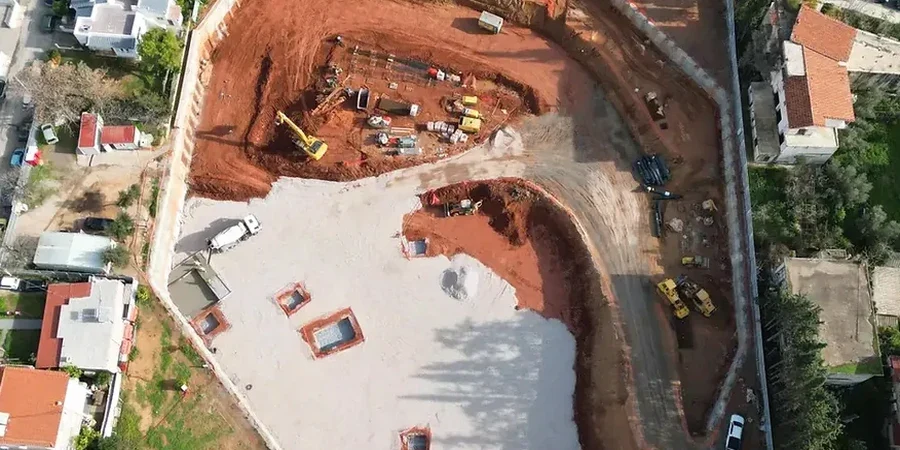
Local geotechnical conditions in Torrance
Torrance transformed from bean fields and oil derricks into a dense suburban city in just a few decades, and much of the older infrastructure—like the 1920s-era storm drains under Old Town—was never designed to withstand adjacent deep excavations. In 2017, a shoring failure during a mixed-use development near the Torrance Courthouse caused a 12-foot collapse that delayed the project by four months and triggered a lawsuit over neighboring building damage. The root cause? Underestimated surcharge from the adjacent right-of-way and a misread on the perched groundwater in the Bellflower aquitard. That case reshaped how we approach peer review for projects within 50 feet of occupied structures. Today, every deep excavation in Torrance requires a pre-construction survey and a contingency plan for unexpected soil transitions. The risk is not theoretical—it is measured in settlement cracks, utility breaks, and OSHA citations.
Our services
We deliver a complete deep excavation package for Torrance projects, from feasibility-level assessment through construction-phase observation. Every design is stamped by a California-licensed geotechnical engineer.
Shoring Design & Submittal Packages
Complete structural calculations for soldier pile, secant pile, and soil nail wall systems, including City of Torrance plan check support and response to correction letters.
Dewatering & Groundwater Control
Design of wellpoint systems, deep wells, and sump networks to depress the water table below subgrade, with discharge permits coordinated through the Los Angeles Regional Water Quality Control Board.
Construction Monitoring & Instrumentation
Inclinometer and survey monitoring programs to track shoring deflection, adjacent settlement, and groundwater levels during excavation, with daily reports for the project superintendent.
Common questions
What shoring system works best for deep basements in Torrance's stiff clays?
For most Torrance projects in the Gardena Complex, soldier pile and lagging with tieback anchors is our first choice. The overconsolidated clays stand up well between piles, reducing lagging costs. Where groundwater is high or adjacent structures are sensitive, we shift to secant pile or diaphragm walls to cut off seepage and limit deflection to under half an inch. The final selection depends on the excavation depth, right-of-way constraints, and whether Caltrans oversight is triggered by proximity to State Route 107.
How much does a deep excavation design cost for a Torrance mixed-use project?
For a typical Torrance mixed-use development with a two-level basement, the geotechnical design package—including shoring calculations, dewatering plan, and plan check support—runs between US$2,360 and US$8,260, depending on project complexity, number of shoring sections, and whether a peer review is required by the city.
Do I need a separate dewatering permit for excavation in Torrance?
The reference range for this service in Torrance is US$2.360 - US$8.260. The final price depends on the project scope and volume.
How do you address vibration concerns during shoring installation near Torrance's residential neighborhoods?
In residential zones like the Seaside Ranchos or Hollywood Riviera, we specify low-vibration drilling methods—typically drilled soldier piles rather than driven—and we set vibration monitoring thresholds per Caltrans guidelines (0.5 in/sec peak particle velocity for stucco homes). Pre-construction condition surveys of adjacent properties are standard practice, and we coordinate work hours with the City of Torrance noise ordinance to minimize disruption.