The marine terraces and weathered shale that define Torrance's topography create a constant negotiation between development and gravity. We see it every week—hillside lots in South Torrance with excellent ocean views but questionable bearing strata, or commercial pads near the 405 carved into old landslide deposits. The morning marine layer adds another variable, keeping surficial soils near saturation for months at a time. That subtle moisture cycle, combined with the seismic shake potential from the Newport-Inglewood fault zone, means a generic slope model won’t cut it. Our approach starts with site-specific shear strength parameters from undisturbed sampling, factoring in the stiff Palos Verdes siltstone when it appears shallow. For deeper characterization, we may recommend CPT testing to map weak lenses that don’t show up in standard borings, particularly in areas where ancient alluvial channels cut through the terrace deposits.
On the Palos Verdes Peninsula, a slope analysis without pore pressure monitoring is just a guess with a safety factor attached.
Service characteristics in Torrance
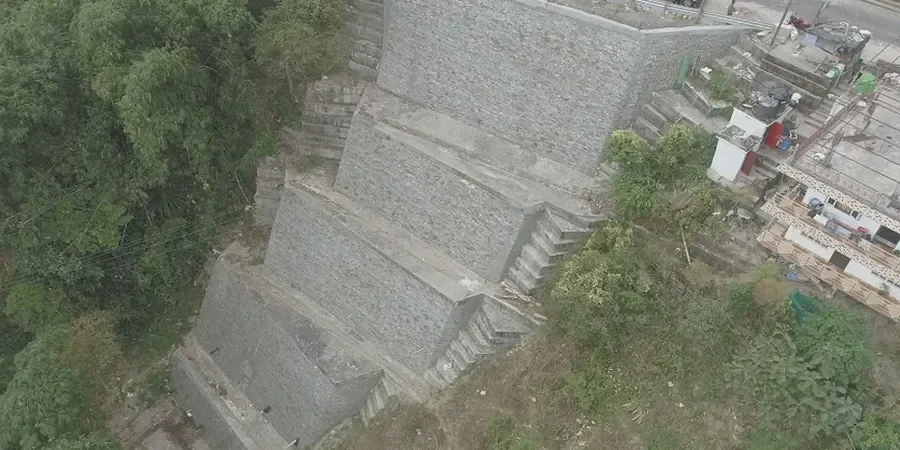
Local geotechnical conditions in Torrance
The slope hazards in Torrance shift dramatically depending on which side of Hawthorne Boulevard you’re on. East of Hawthorne, in the flatlands that extend toward the 110 freeway, the risk is almost entirely man-made—oversteepened fill slopes behind industrial parks and poorly compacted embankments from the post-war building boom. West of Hawthorne, climbing into the Hollywood Riviera and the flank of the Palos Verdes Peninsula, you’re dealing with ancient landslides, dipping bedrock, and coastal bluff retreat. We’ve pulled samples from sites less than a mile apart where one showed competent siltstone at ten feet and the other hit landslide debris past forty feet with no refusal. The Portuguese Bend landslide complex, just down the coast, is a stark reminder of what happens when you misread the stratigraphy. Torrance sits on the edge of that same geologic story, and skipping a proper stability analysis on a hillside lot isn’t a calculated risk—it’s a gamble with a known outcome.
Our services
Our slope stability work in Torrance covers the full chain from field investigation to design recommendations. We don’t farm out the lab work—all shear strength testing runs through our own equipment, which means we can turn around critical results in days instead of weeks when a winter storm is coming.
Hillside Site Characterization
Rotary wash borings and CPT soundings to map stratigraphy, identify slip surfaces, and install piezometers for long-term groundwater monitoring on Torrance hillside lots.
Landslide Hazard Evaluation
Geomorphic mapping, inclinometer monitoring, and residual shear strength testing for properties within mapped landslide zones on the Palos Verdes Peninsula margin.
Retention and Cut Slope Design
Stability modeling for proposed cut slopes, fill slopes, and retaining structures, including seismic deformation analysis per ASCE 7 requirements.
Common questions
What does a slope stability analysis cost in Torrance?
Based on recent projects across Torrance, a complete slope stability analysis—including drilling, lab testing, and engineering modeling—ranges from US$1,220 to US$3,710. The final figure depends on slope height, access constraints, and whether we need to install piezometers for groundwater monitoring.
Does Torrance require a slope stability study for hillside construction?
Yes. The City of Torrance building department follows IBC Chapter 18 and local hillside ordinances that require geotechnical reports for any construction on slopes steeper than 3:1 or within mapped landslide hazard zones. Our reports are prepared to meet these submittal requirements.
How do you handle the seismic component in a slope analysis?
We apply pseudostatic analysis using horizontal seismic coefficients derived from ASCE 7-22 and the IBC site class determined from shear wave velocity testing at the site. In Torrance, proximity to the Newport-Inglewood fault typically drives coefficients between 0.15g and 0.25g for critical slopes.
What’s the turnaround time for a slope stability report?
A standard hillside lot study takes two to three weeks from drilling to final report. Complex sites with deep landslide deposits or requiring piezometer equilibration can extend to four or five weeks. We coordinate the drilling, lab testing, and analysis in-house to avoid subcontractor delays.