Drive from the flatlands east of Crenshaw Boulevard over toward the slopes rising into Palos Verdes, and you’ll feel the difference under the tires before you see it on a map. The western edge of Torrance sits on older, stiffer Pleistocene terrace deposits, while the central and eastern sections ride atop younger alluvium with clay lenses that swell after winter rains and shrink through the dry summers. That contrast matters when you’re designing asphalt layers meant to last a decade under heavy refinery truck traffic. In our expertise, a pavement section that works perfectly near Wilson Park starts rutting within two seasons near the 405 if the subgrade wasn’t characterized at depth. We approach flexible pavement design here by mapping that lateral variability first, then building the structural section from the bottom up. The process leans heavily on subgrade CBR values obtained through SPT drilling and laboratory grain-size analysis, because the native silty sands and lean clays Torrance is built on don’t behave uniformly under repeated loading.
In Torrance, the pavement section that lasts is the one that respects the subgrade’s seasonal moisture swing—design for August stiffness and February drainage, not the other way around.
Service characteristics in Torrance
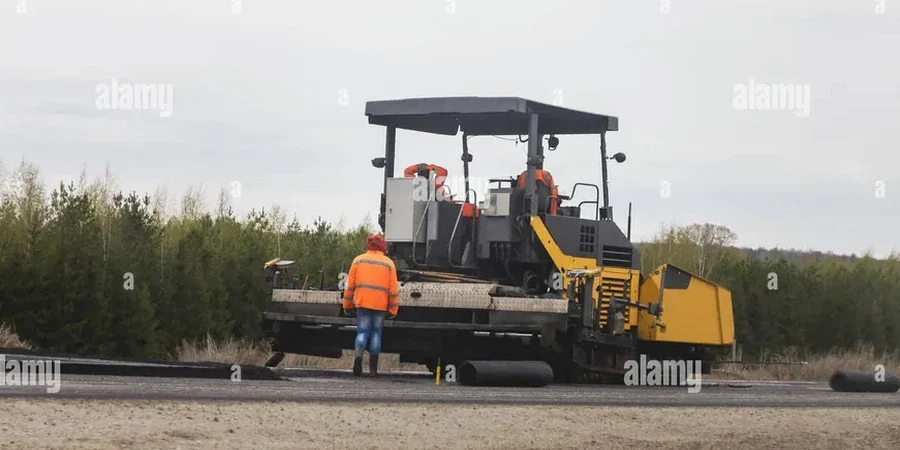
Local geotechnical conditions in Torrance
IBC Section 1805 and the Caltrans Highway Design Manual both require site-specific geotechnical data before pavement structural design proceeds—and in Torrance, that requirement is not a formality. The biggest risk we see is differential heave beneath flexible pavements where a clay-rich subgrade was over-excavated in one section but left untreated in the adjacent lane. After two or three wet-dry cycles, longitudinal cracking follows the treatment boundary almost exactly. We’ve also measured groundwater within three feet of grade east of Hawthorne Boulevard, and that perched water wrecks unbound base layers through pumping and fines migration. A pavement design that ignores these local conditions fails early, and the repair cost—full-depth reconstruction plus traffic control along busy corridors like Sepulveda or Torrance Boulevard—dwarfs the upfront investment in a proper geotechnical investigation.
Our services
Our flexible pavement design workflow for Torrance projects integrates field characterization with laboratory performance testing so the structural section is calibrated to actual subgrade conditions, not generic assumptions:
Subgrade investigation & CBR profiling
SPT borings and test pits at 200–500 ft spacing along the alignment, with soaked CBR tests on remolded specimens to bracket the seasonal moisture range.
Structural number & layer optimization
AASHTO-based design with iterative adjustment of asphalt, base, and subbase thicknesses until the required SN is met for the target ESAL range.
Drainage & geotextile specification
Edge drains, daylighted base layers, and non-woven geotextile separators specified where subgrade fines exceed 50% passing the No. 200 sieve.
Construction QA/QC testing
Nuclear gauge density testing, asphalt coring for thickness and air voids, and proof-rolling with a loaded water truck before base placement.
Common questions
What’s the typical cost range for a flexible pavement design package on a Torrance commercial lot?
For a standard commercial lot under 2 acres, the geotechnical investigation and pavement design package usually falls between US$1,520 and US$4,840, depending on the number of borings, lab testing scope, and traffic loading complexity.
Do Torrance soils require lime or cement stabilization for flexible pavement subgrades?
It depends on the plasticity index. When the near-surface clay has a PI above 20 and a soaked CBR below 3%, we typically recommend lime treatment to 12–18 inches depth, mixed and compacted to 95% modified Proctor. For lower-plasticity silts, cement-modified soil often works better.
How deep should the subgrade investigation go for a flexible pavement design in this area?
We core or auger to a minimum depth of 5 feet below finished subgrade, or until we encounter competent native soil—whichever is deeper. In the Sepulveda corridor where fill thickness can exceed 10 feet, we often extend borings to 15 feet to rule out compressible layers.
How long does the design and testing process take from start to stamped report?
Fieldwork plus lab testing typically takes 10–15 business days. The design report with stamped structural sections and Caltrans-compatible specifications follows within another week, assuming no unexpected subsurface conditions that require additional investigation.