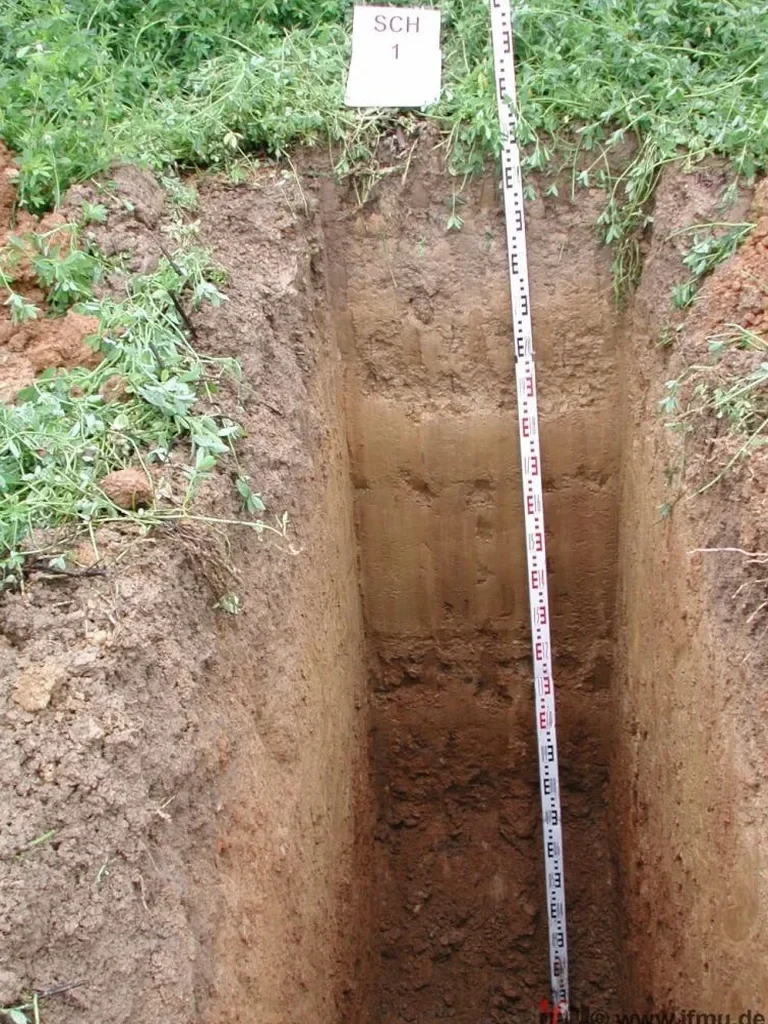
IBC Section 1803 requires adequate subsurface exploration before foundation design, and in Torrance that requirement carries specific weight. The city sits on a complex alluvial basin at 33.83°N latitude, with Pleistocene Lakewood Formation deposits overlying older marine sediments. Much of eastern Torrance overlays what was once a vast wetland system drained in the early 20th century. A standard boring log cannot capture what an open excavation reveals: actual stratification, lenses of organic silt, and the contact between fill and native ground. Our exploratory test pit service opens a direct window into those conditions. Unlike indirect methods, a test pit allows the geotechnical engineer to observe soil structure, measure layer thicknesses, and sample exactly the horizon of interest. We often complement this with in-situ permeability testing when groundwater is encountered within the first 15 feet, and coordinate with CPT soundings to extend the profile depth beyond what the trench can safely reach.
A test pit replaces inference with observation—you see the soil, you measure the layering, and you sample precisely where it matters.
Service characteristics in Torrance
Local geotechnical conditions in Torrance
Torrance lies within the Los Angeles Basin, where the Newport-Inglewood Fault runs less than five miles east of the city center. The 1933 Long Beach earthquake, magnitude 6.4, caused widespread liquefaction and structural damage across the South Bay. Modern ASCE 7-22 mapping assigns portions of Torrance to Site Class D or E depending on underlying deposits, and the city's 2018 General Plan Safety Element identifies liquefaction susceptibility zones particularly in areas west of Crenshaw Boulevard. Skipping exploratory test pits in these zones means designing shallow foundations without verifying whether the upper 10 feet contain liquefiable sand layers. A visual trench log provides direct evidence of soil fabric, presence of silty interbeds, and groundwater depth—all critical inputs for seismic settlement analysis. When the pit exposes clean fine sand below the water table, we integrate findings with our liquefaction assessment to quantify cyclic stress ratio and expected settlement under the design earthquake.
Our services
Our Torrance test pit operations cover the full investigation cycle from excavation planning to final reporting. Every project receives direct oversight from a California-licensed geotechnical engineer.
Shallow Foundation Verification
Test pits excavated to footing depth for direct inspection of bearing stratum. Includes hand-auger borings from the pit floor to extend investigation depth and confirm no soft layers exist within the zone of influence.
Utility and Pavement Section Investigation
Trenching across existing pavement or utility corridors to document base course thickness, subgrade condition, and backfill quality. Used extensively in Torrance's commercial redevelopment projects along Hawthorne and Sepulveda Boulevards.
Common questions
What depth can test pits reach in Torrance soils?
Unshored pits in Type C soil are limited to 4 feet depth per OSHA 1926 Subpart P. For deeper investigations, we step the excavation, use trench boxes, or slope the walls to 1.5H:1V. Practical maximum with shoring is typically 12 to 15 feet, depending on groundwater and soil stability. Below that depth, we transition to borehole methods from the pit floor.
What does an exploratory test pit cost in Torrance?
Typical pricing for a single exploratory test pit in Torrance ranges from US$510 to US$800, depending on depth, access constraints, and whether shoring is required. This includes excavation, logging by a geologist, sampling, photographic documentation, and a summary report with recommendations. Traffic control permits, if needed along public streets, are additional.
How are test pits different from standard soil borings?
A boring recovers a 2-inch diameter sample and provides a vertical profile; a test pit exposes a continuous soil face several feet wide. This lets the geologist see lateral variability, measure layer contacts directly, and identify features like desiccation cracks, root penetration, or construction debris that a boring can miss. Block samples taken from a pit wall preserve soil structure better than disturbed auger cuttings.
Do I need a permit for a test pit in Torrance?
Yes. The City of Torrance Public Works Department requires an encroachment permit for any excavation within the public right-of-way. Private property excavations generally do not need a city permit but must comply with OSHA trenching safety regulations and Underground Service Alert (USA 811) marking requirements. We handle utility clearance and permit coordination as part of the project scope.